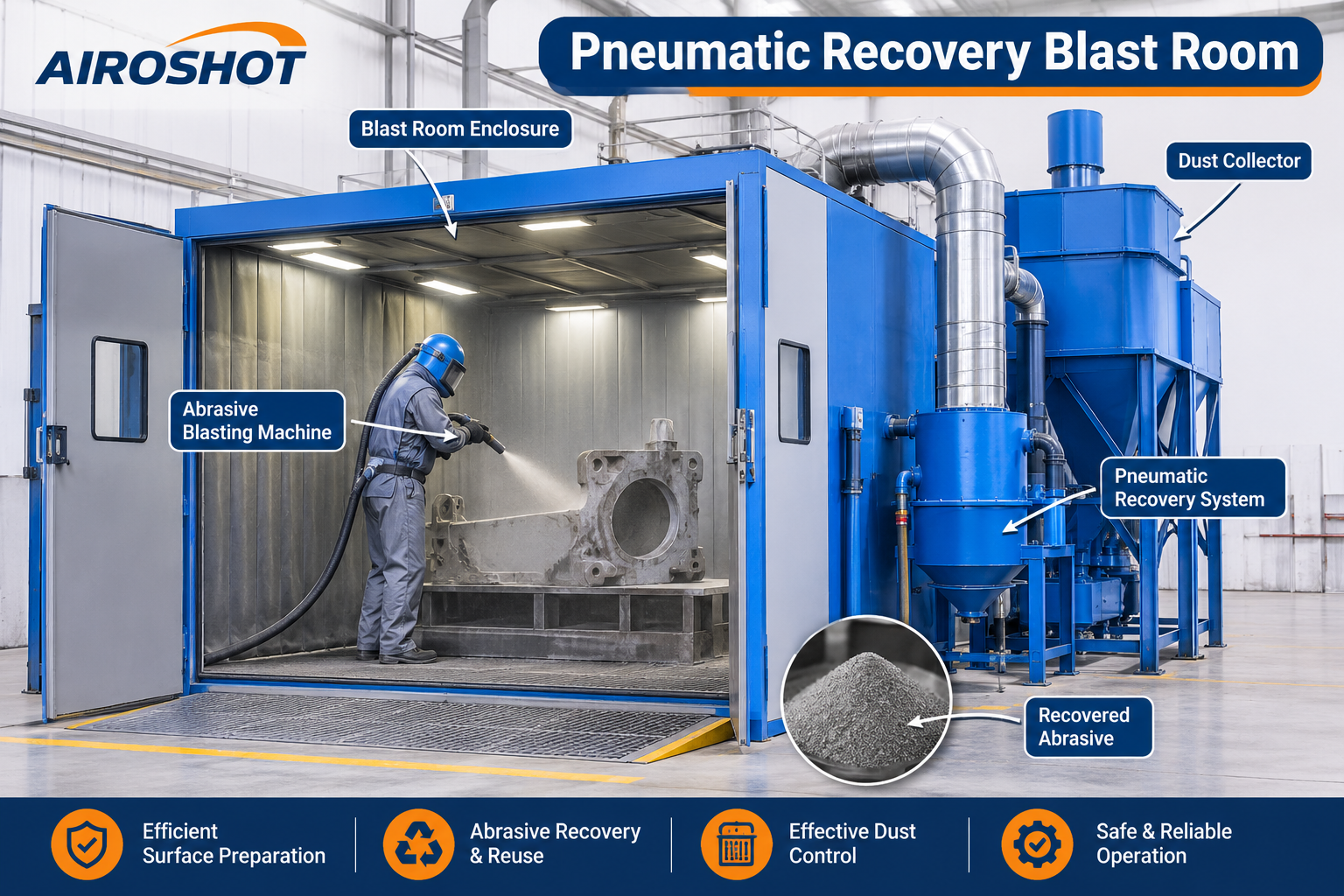
Pneumatic Recovery Blast Room: A Complete Guide to Pitless Blast Room Systems
What if you could recover reusable abrasives from your blasting operation without constructing a deep underground recovery pit? For industrial facilities, installing a blast room is not just about removing rust, paint or mill scale. It also involves managing spent abrasives, controlling dust, reducing manual cleaning and making efficient use of available floor space.
A pneumatic recovery blast room offers a practical approach to these challenges. It uses suction or controlled airflow to collect used abrasives and transport it to a separation unit for cleaning and reuse. When designed as a pitless system, it can also reduce the need for extensive floor excavation.
For fabrication workshops, machinery manufacturers and industrial maintenance facilities, understanding how pneumatic recovery works can help in selecting a suitable blasting solution.
What Is a Pneumatic Recovery Blast Room?
A pneumatic recovery blast room is an enclosed abrasive blasting facility equipped with a suction based or air powered system for collecting and conveying used abrasive media.
During blasting, abrasive particles strike the workpiece to remove surface contaminants. The spent abrasive, dust and removed material collect on the floor. A pneumatic recovery system draws the collected material through suction points or designated collection channels and transfers it to a recovery unit, where reusable abrasive is separated from unwanted debris. A dust collector works alongside the recovery system to extract airborne dust and fine particles, helping maintain a cleaner working environment, improve visibility and support safer blasting operations.
The reusable abrasive is cleaned and returned to the blasting equipment, while dust, broken particles and unwanted contaminants are removed.
A pitless blast room is a configuration designed to avoid the need for a deep underground recovery pit. Depending on the design, abrasives may be collected through above-ground hoppers, low-profile floor arrangements or designated suction points.
Not every pneumatic recovery blast room is pitless. The floor arrangement and recovery method must be confirmed according to the actual equipment configuration.
How Does a Suction Recovery Blast Room Work?
A suction recovery blast room combines abrasive blasting, collection, separation and reuse into a continuous recovery process.
Abrasive Blasting Inside the Enclosure
The operator uses an abrasive blasting machine to propel abrasive media through a blasting nozzle towards the workpiece. The abrasive removes rust, old coatings, mill scale and other contaminants according to the required surface preparation standard.
The enclosed chamber helps contain blasting debris and provides a designated working area for industrial surface treatment.
Collection of Used Abrasive
After impact, the abrasive falls onto the floor. In a pitless configuration, the media may be collected through a low profile hopper, suction point or designated recovery channel.
Depending on the system, abrasives can be moved towards the collection point manually or through an automated floor arrangement.
Pneumatic Conveying Through the Suction System
A vacuum unit or air-powered recovery mechanism creates the airflow required to transport collected abrasive and debris through ducting.
The material is transferred to the recovery equipment without relying on conventional underground screw conveyors or bucket elevators.
Abrasive Separation and Cleaning
The collected mixture passes through a separator or abrasive cleaning unit. The cleaning process removes dust, broken particles and unwanted contaminants from reusable media.
The exact separation arrangement depends on abrasive type, contamination level and required media quality.
Reuse of Clean Abrasive
After cleaning, suitable abrasive is returned to a storage hopper or blasting vessel for reuse. Dust and unwanted material are directed to the dust collection system for controlled handling.
This recovery cycle can help reduce abrasive waste and improve material management during repeated blasting operations.
Key Components of a Pitless Blast Room System
A properly designed pneumatic recovery blast room combines several components to support efficient operation.
| Component | Main Function |
| Blast room enclosure | Contains the blasting process and workpiece |
| Suction recovery unit | Creates airflow to collect used abrasive |
| Floor hopper or collection point | Directs abrasive towards the recovery system |
| Pneumatic ducting | Transfers abrasive and debris to the separator |
| Abrasive separator or reclaimer | Separates reusable media from dust and contaminants |
| Storage hopper | Holds cleaned abrasive before reuse |
| Dust collector | Captures airborne dust and fine particles |
| Blasting equipment | Propels abrasive towards the workpiece |
The capacity and arrangement of these components should be selected according to workpiece dimensions, abrasive type, blasting frequency and available installation space.
Pneumatic Recovery vs. Mechanical Recovery Blast Room
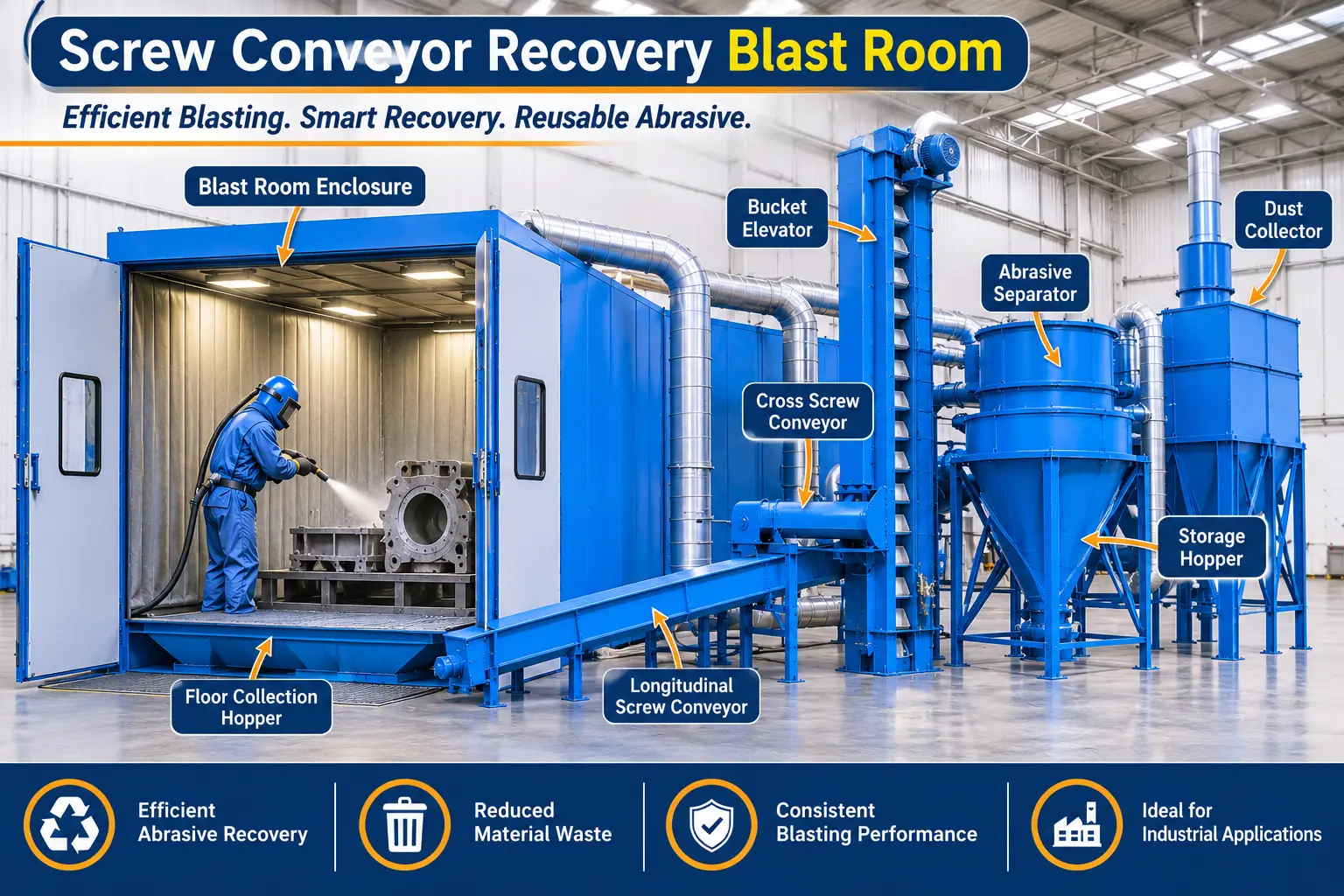
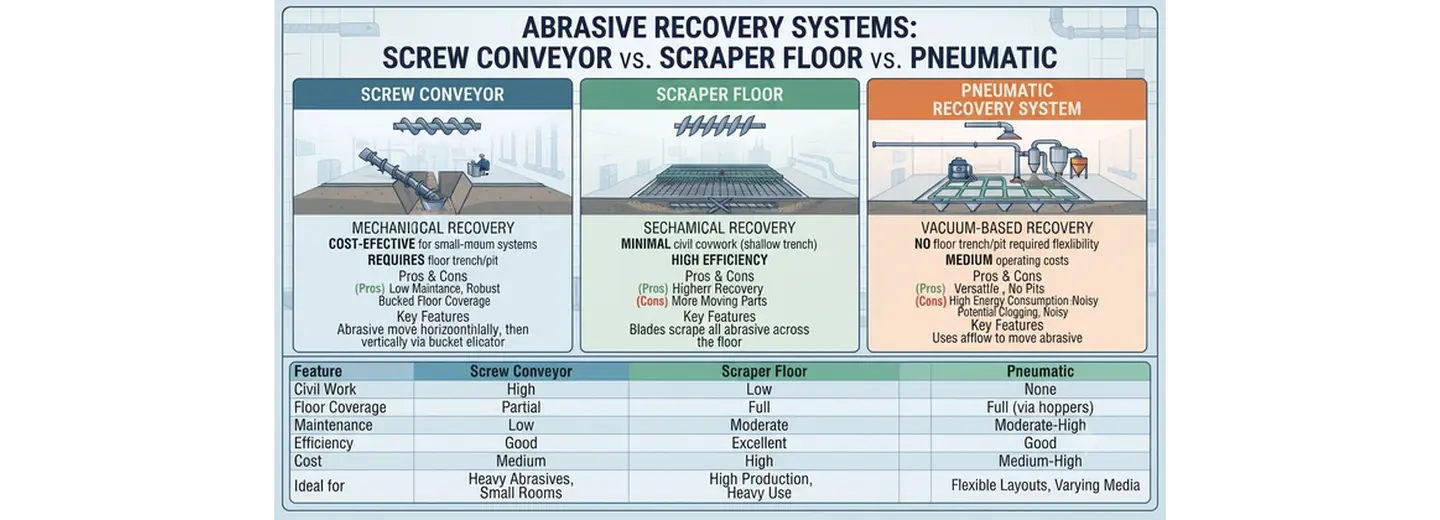
Both pneumatic and mechanical recovery blast rooms collect used abrasives and return reusable media to the blasting equipment. Their main difference is how the abrasive is transported.
A pneumatic recovery system uses suction or airflow to move material through ducts. A mechanical recovery system typically uses floor conveyors and a bucket elevator to transfer abrasive to the cleaning equipment.
The following comparison highlights the common differences between these two systems.
| Comparison Factor | Pneumatic / Suction Recovery | Mechanical Recovery |
| Recovery method | Suction and pneumatic conveying | Screw conveyors and bucket elevator |
| Abrasive compatibility | Often suitable for compatible lightweight abrasives | Commonly used with heavy metallic abrasives |
| Typical abrasive media | Glass beads, aluminium oxide and other approved media | Steel shot, cast steel grit and other reusable abrasives |
| Installation | Can use above ground or low-profile collection arrangements | Often uses floor conveyors and may require a recovery pit |
| Civil construction | Can reduce the need for deep excavation in pitless designs | May require more extensive floor preparation |
| Recovery capacity | Depends on suction capacity, ducting and abrasive characteristics | Can be configured for high-volume recovery requirements |
| Maintenance | Requires inspection of suction equipment, ducts and filters | Requires inspection of conveyors, elevator and associated components |
| Best suited for | Suitable lightweight media and installations with limited excavation | Heavy-duty blasting and high-throughput operations |
| Main limitation | Heavy abrasive may exceed the system's conveying capability | Greater installation complexity and potential civil construction requirements |
Which Recovery System Is Better?
A pneumatic recovery pressure blast room can be a practical choice when the facility uses compatible lightweight abrasive media, has limited space for underground recovery equipment or needs a simpler installation.
A mechanical recovery blast room is generally more suitable when the operation uses heavy metallic abrasives, requires continuous high volume recovery or handles demanding production schedules.
Neither system is automatically better for every application. The final selection should consider abrasive type, recovery rate, workpiece size, floor layout and total operating cost.
Benefits of a Pneumatic Recovery Blast Room
Reduced Civil Construction Requirements
A pitless sand blast room can eliminate the need for a deep underground recovery pit. This may be useful when installing sand blasting equipment inside an existing industrial building or where excavation is difficult. .
The actual foundation and floor requirements still depend on the equipment design and installation conditions.
Simplified Recovery Arrangement
Pneumatic recovery systems can operate without conventional screw conveyors and bucket elevators in the recovery circuit. This may reduce the number of mechanical conveying components requiring routine servicing.
Improved Abrasive Management
Collecting and cleaning reusable abrasives can help reduce material losses and the need for frequent abrasive replacement. Actual savings depend on abrasive durability, recovery efficiency and operating conditions.
Flexible Installation Options
Suitable pitless configurations can be considered for workshops with limited excavation space, existing concrete floors or changing production requirements.
Better Housekeeping
A properly designed recovery and dust collection system helps control spent abrasive and blasting debris. Effective dust extraction, filtration and maintenance remain essential for maintaining visibility and a suitable working environment.
Applications of a Pitless Sand Blasting Room
A pneumatic recovery blast room can be considered for suitable industrial applications such as:
- Steel fabrication and structural component preparation
- Automotive and engineering component refurbishment
- Machinery and equipment maintenance
- Surface preparation before protective coating
- Industrial workshops with limited space for underground recovery pits
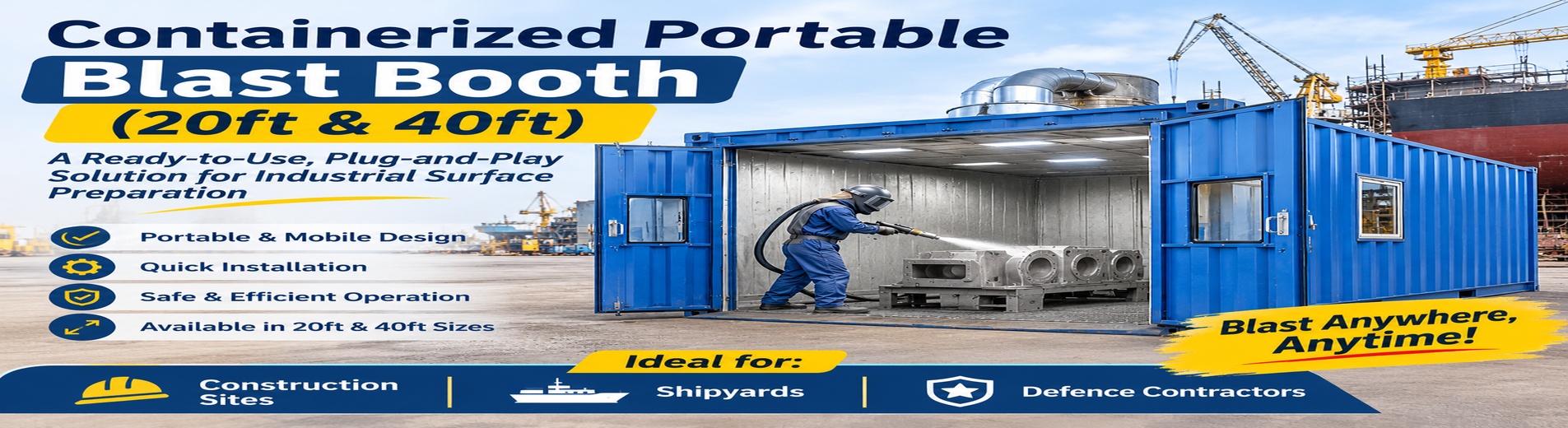
- Maintenance facilities requiring flexible blasting equipment installation
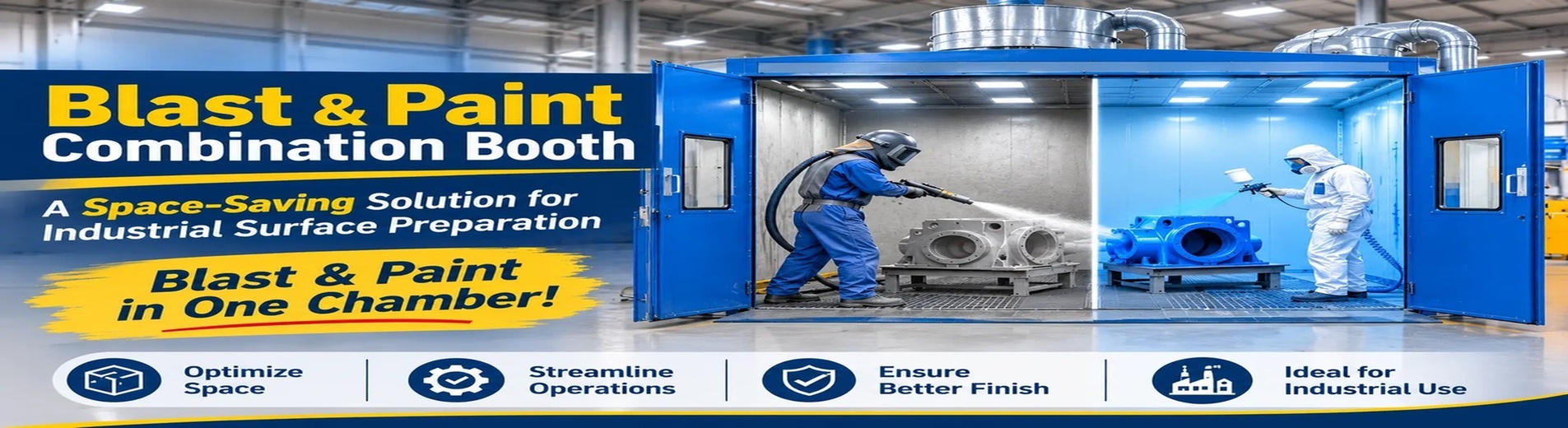
The sand blasting machine delivers abrasive to the workpiece for cleaning, rust removal and surface preparation, while the pneumatic recovery system collects spent abrasive and transfers it for separation and reuse. The dust collector helps extract airborne dust and fine particles generated during blasting.
How to Choose the Right Pneumatic Recovery Blast Room
Before selecting a pitless blast room, evaluate the following factors:
- Workpiece dimensions: Confirm the maximum component size, loading method and available room dimensions. For a portable blast room, check whether the enclosure can accommodate the workpiece and be transported to the required location.
- Abrasive compatibility: Check whether the recovery system can handle the required abrasive type, particle size and density.
- Recovery capacity: Match the system capacity to abrasive consumption and expected blasting workload.
- Floor arrangement: Review whether the installation requires a flat floor, above-ground hopper, recessed channel or another collection design.
- Dust extraction: Ensure that the dust collector and airflow arrangement are suitable for the blasting process and applicable safety requirements.
- Maintenance access: Allow sufficient space to inspect filters, ducts, separators, hoppers and other serviceable components.
Explore Pneumatic Recovery Blast Room Solutions from AIROSHOT
Choosing the right blast room involves more than selecting a recovery unit. The enclosure, blasting equipment, abrasive handling arrangement, dust collection system and workpiece movement must function together. For facilities seeking higher production efficiency, an automatic blast room can integrate abrasive recovery, material handling and blasting operations to reduce manual intervention and support consistent surface preparation.
AIROSHOT provides industrial shot blasting and abrasive blasting equipment solutions for surface preparation applications. Businesses planning a pneumatic or pitless blast room can evaluate their workpiece dimensions, production requirements, abrasive type and available installation space before finalizing a suitable configuration.
For a project-specific recommendation, discuss your application requirements with the BLASTROOMS team and request a quotation for a suitable blast room solution.
Conclusion
A pneumatic recovery blast room can be a practical solution for industrial surface preparation when reduced excavation, controlled abrasive recovery and simpler conveying arrangements are important.
Compared with mechanical recovery, pneumatic systems can offer installation advantages for suitable lightweight abrasives and selected pitless applications. Mechanical recovery may be more appropriate for heavy metallic abrasives and demanding production requirements.
The best system depends on abrasive compatibility, workpiece size, recovery capacity and installation conditions. A proper technical assessment helps ensure that the selected blast room matches the actual requirements of the blasting operation.