Blast & Paint Combination Booth: A Space-Saving Solution for Industrial Surface Preparation
What if your facility could prepare metal surfaces for painting without needing two separate workspaces? For manufacturers working with limited floor space, installing individual blasting and painting chambers can be expensive and difficult to manage. A Blast & Paint Combination Booth offers a practical solution by bringing both surface preparation and spray painting operations into one integrated chamber.
Designed for industrial applications, this equipment helps businesses optimize available space, simplify material handling, and create an organized finishing process. However, selecting the right combination booth requires understanding its working principle, safety requirements, and suitability for your production needs.
What Is a Blast & Paint Combination Booth?
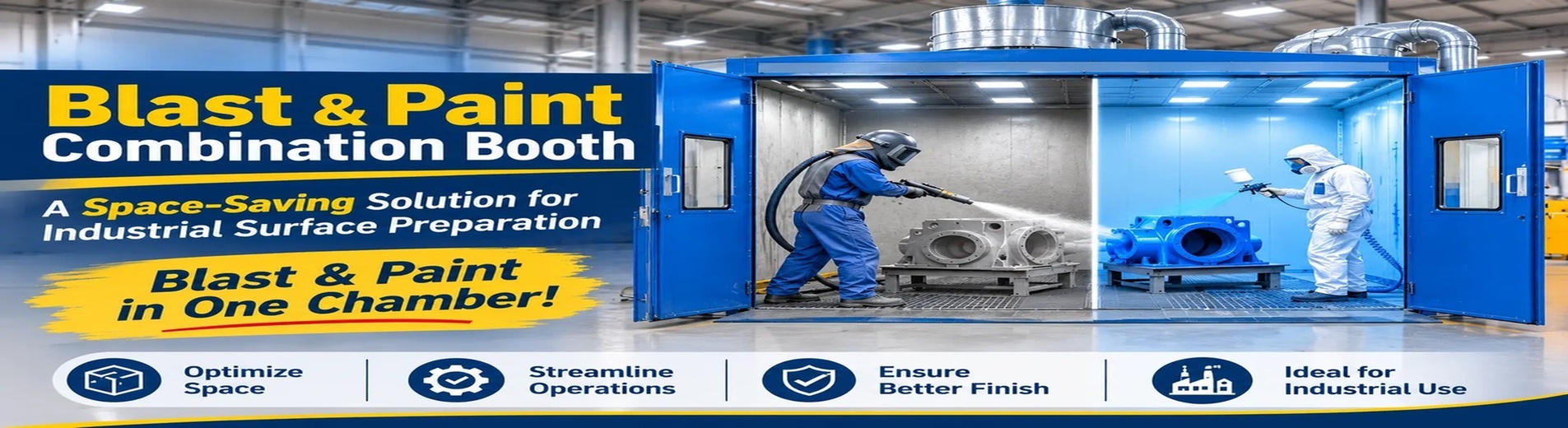
A Blast & Paint Combination Booth is an industrial enclosure designed to perform abrasive blasting and spray_painting operations within the same chamber.
During blasting, suitable abrasive media removes rust, mill scale, old coatings, and surface contaminants from metal components. Depending on the material and surface preparation requirements, abrasive options may include steel grit, steel shot, garnet, aluminium oxide, or plastic abrasive media. Plastic abrasive media is particularly useful for removing paint and coatings from softer metals, composite materials, and delicate components where minimizing substrate damage is important. Once the surface is properly prepared, the equipment transitions to the painting stage, where a protective or decorative coating is applied.
Unlike separate blasting and painting booths, a combination system uses a shared workspace with application specific equipment and ventilation arrangements.
It is particularly useful for manufacturers who want to perform both operations in one location without allocating additional floor space for separate chambers.
How Does a Blast & Paint Combination Booth Work?
A combination booth follows a controlled sequence of surface preparation and coating application.
Abrasive Blasting
The metal component is placed inside the booth, where abrasive blasting machine removes rust, scale, and unwanted coatings. The selected abrasive media and blasting method depend on the material, component geometry, and required surface finish.
Dust Removal and Surface Inspection
After blasting, residual abrasive and dust must be removed from the component and chamber. The prepared surface is inspected to ensure it meets the required cleanliness and coating specifications.
Spray Painting
Once the chamber is cleaned and made suitable for painting, the spray painting system applies the required coating. Proper ventilation and overspray management help maintain coating quality and a controlled working environment.
Drying and Component Removal
Depending on the coating system, the component may remain in the booth for an appropriate curing period or move to a separate curing area. The finished component is then inspected and removed.
Important: Blasting and spray painting must not operate simultaneously in a shared chamber. The booth should be specifically engineered for both processes, with suitable dust extraction, paint exhaust, filtration, and safety controls.
Why Choose a Combination Booth for Limited Space?
For facilities with restricted floor space, a combination booth can offer several operational advantages.
- Space optimization: One chamber accommodates two finishing operations, reducing the need for separate booth footprints.
- Simplified material handling: Components can remain in the same location during blasting and painting, reducing unnecessary movement.
- Organized production flow: A controlled sequence of surface preparation and coating helps streamline finishing operations.
- Flexible applications: The booth can handle different component sizes and shapes when designed according to production requirements.
- Potential infrastructure savings: Combining workspaces may reduce the need for separate enclosures and associated building modifications.
- Suitable abrasive media: Stainless steel shot can be used for selected blasting and finishing applications where reusable abrasive media and controlled surface treatment are required. Its suitability depends on the component material, desired finish, and blasting system configuration
The actual savings depend on the booth design, ventilation requirements, equipment configuration, and production volume.
Blast & Paint Combination Booth vs Separate Booths
Choosing between a combination booth and separate blasting and painting booths depends on your available floor space, production volume, and finishing requirements.
| Comparison Factor | Combination Booth | Separate Booths |
| Space requirement | Uses one shared chamber for both processes | Requires dedicated space for each operation |
| Installation | Can simplify installation where space is limited | Requires separate booth installations |
| Material handling | Components can remain in the same chamber | Components may need to be transferred between booths |
| Production workflow | Blasting and painting are performed sequentially | Both processes can operate independently |
| Production capacity | Suitable for batch processing and selected workloads | Better suited to high-volume production requiring parallel operations |
| Initial investment | May reduce infrastructure and enclosure costs | Separate equipment and infrastructure may increase initial costs |
| Maintenance | Shared infrastructure requires coordinated maintenance | Each booth can be maintained independently |
| Best suited for | Small and medium sized facilities with limited floor space | Large facilities with continuous production requirements |
Which Option Should You Choose?
A combination booth is a practical choice for manufacturers who want to perform blasting and painting in one chamber while making efficient use of limited floor space.
Separate booths may be more suitable for high-volume production facilities where blasting and painting need to operate simultaneously. The best option depends on your component dimensions, production targets, available utilities, and budget.
For facilities requiring reduced dust generation during surface preparation, a wet blasting nozzle can be considered as an additional equipment option. It combines water with abrasive media to help remove surface contaminants while reducing airborne dust. The nozzle and wet blasting system should be compatible with the booth design and the required surface finish.
Key Features to Consider Before Buying
Selecting the right industrial blast and paint booth involves more than checking its dimensions.
|
Feature |
Why It Matters |
|
Booth dimensions |
Must accommodate the largest component and provide sufficient working clearance. |
|
Blasting system |
Should match the component material, surface condition, and required finish. |
|
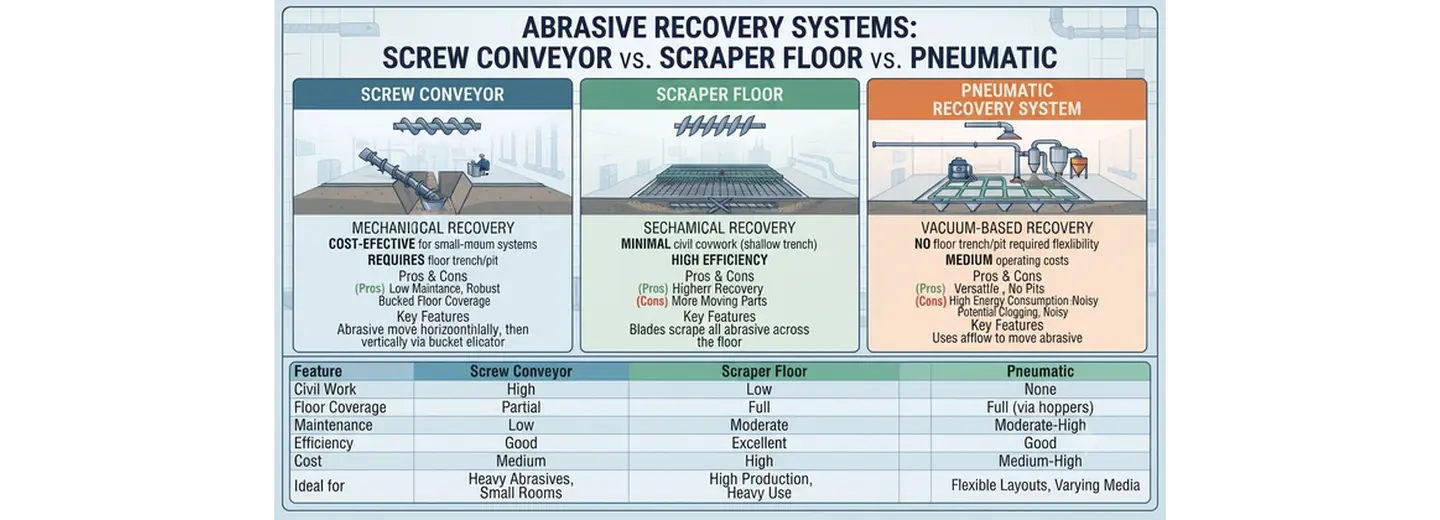
Abrasive recovery |
Helps collect and reuse suitable abrasive media, reducing waste. |
|
Dust collection system |
Controls airborne dust during blasting and supports a cleaner working environment. |
|
Paint ventilation |
Provides suitable airflow and manages paint overspray and hazardous vapours. |
|
Lighting and visibility |
Supports component inspection and accurate painting. |
|
Safety controls |
Help prevent unsafe operation and ensure proper switching between blasting and painting modes. |
A well designed booth should also include appropriate fire protection, electrical equipment, ventilation interlocks, and safeguards against abrasive and paint-system cross contamination.
Applications of Blast & Paint Combination Booths
A combination booth is suitable for industries that require both abrasive blasting and protective coating of metal components. Depending on the application, abrasive media such as garnet sand, steel grit, and aluminium oxide can be selected for effective surface preparation before painting.
Common applications include:
- Steel fabrication and structural steel finishing
- Industrial machinery and equipment refurbishment
- Automotive and heavy vehicle component finishing
- Agricultural equipment manufacturing
- Metal tanks, frames, and fabricated assemblies
- Maintenance and repair workshops
For smaller manufacturing facilities, the ability to perform both operations in one chamber can be particularly valuable.
Is a Blast & Paint Combination Booth Right for Your Facility?
A combination booth is worth considering when your facility has limited floor space, processes components in manageable batches, and requires both blasting and painting at the same location.
However, a separate blasting room and painting booth may be more suitable for high volume production lines where both operations need to run continuously.
Before finalizing your equipment, evaluate component dimensions, production capacity, abrasive recovery requirements, coating specifications, and available utilities.
Choose the Right Blast & Paint Combination Booth
The right Blast & Paint Combination Booth can help manufacturers make better use of available space while maintaining an organized surface preparation and coating process.
When evaluating a system, focus on its chamber size, blasting configuration, abrasive recovery, ventilation, and safety features rather than selecting equipment based on price alone.
BLASTROOMS provides industrial blasting equipment and surface preparation solutions for manufacturing and fabrication applications. Businesses planning to install a combination booth can explore suitable equipment configurations based on their component dimensions, production requirements, and available workspace.
Looking for a Blast & Paint Combination Booth for your facility? Contact BLASTROOMS to discuss your application requirements and identify a suitable solution for your industrial finishing operations.