Screw Conveyor Recovery Blast Room: Working, Benefits & Industrial Applications
What happens to the thousands of abrasive particles that fall onto the floor after blasting a large steel structure? In a busy fabrication workshop, collecting this material manually can consume valuable production time, increase labour requirements and interrupt surface preparation.
A screw conveyor recovery blast room offers a mechanical solution to this challenge. It uses rotating screw conveyors to collect spent abrasive from the floor and transport it towards a recovery unit, where reusable media is cleaned and returned to the blasting equipment.
For industrial buyers handling steel fabrication, heavy machinery and large metal components, this recovery arrangement can improve abrasive management and reduce repetitive material handling. Understanding its working process, floor layout and maintenance requirements helps determine whether a screw conveyor blast room is suitable for a particular production facility.
What Is a Screw Conveyor Recovery Blast Room?
A screw conveyor recovery blast room is an enclosed abrasive blasting facility equipped with a mechanical system for collecting, transporting, cleaning and reusing abrasive media.
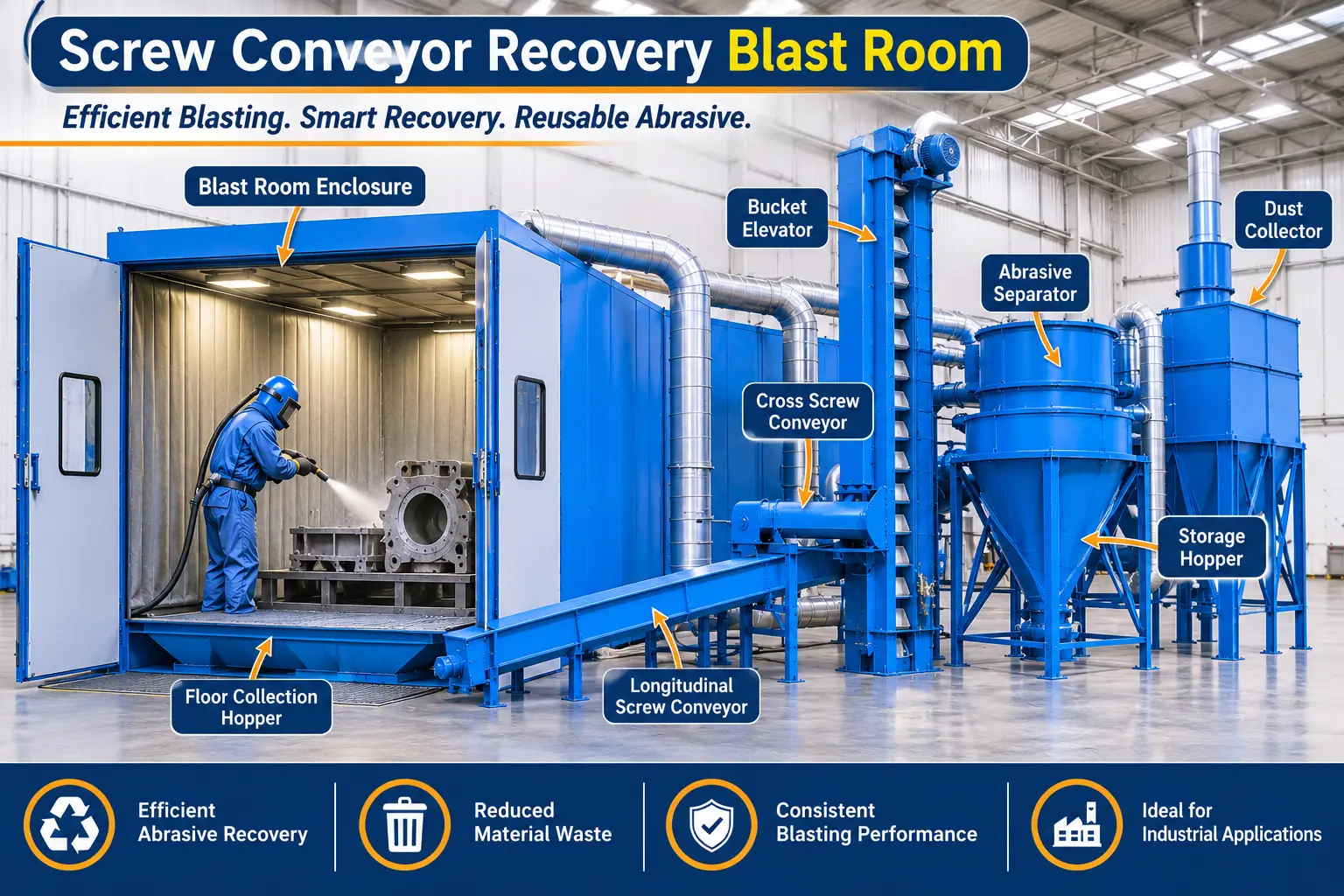
The recovery system typically includes floor collection hoppers, screw conveyors, a bucket elevator, an abrasive separator and a storage hopper. The screw conveyors move spent abrasive towards the recovery equipment, while the separator removes dust, broken particles and unwanted contaminants.
The cleaned abrasive is then returned to the blasting machine for reuse.
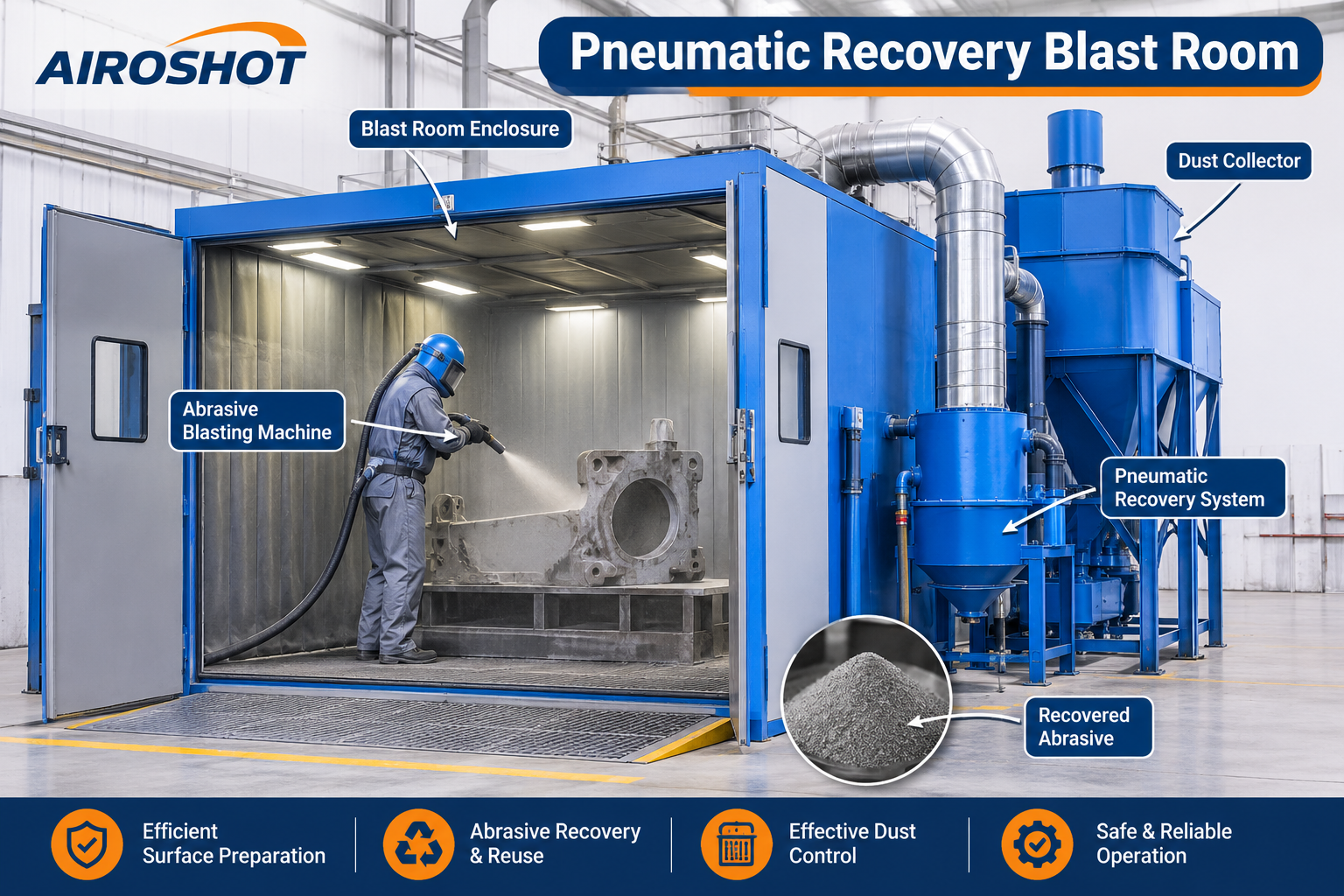
A suction blast room uses a pneumatic recovery system that collects spent abrasive through suction points or designated channels and transfers it to a recovery unit. Unlike a screw conveyor recovery blast room, which relies on mechanical conveying, a suction blast room uses airflow to transport the collected material. Both systems can support abrasive recovery and reuse when designed for compatible abrasive media and operating conditions.
This system is commonly considered for industrial applications using suitable durable abrasive media, particularly where regular mechanical recovery is required. The final configuration depends on abrasive characteristics, production requirements, room dimensions and the required recovery capacity.
How Does a Screw Conveyor Recovery Blast Room Work?
A mechanical abrasive recovery system follows a coordinated process to collect and reuse blasting media.
Abrasive Blasting Inside the Enclosure
The operator directs abrasive towards the workpiece using a blasting nozzle. The abrasive removes rust, mill scale, old coatings and other surface contaminants.
The blast room enclosure contains the blasting operation and provides a designated working area for industrial surface preparation.
Collection Through Floor Hoppers
After impact, spent abrasive falls onto the blast room floor. Depending on the recovery layout, the material enters collection hoppers or designated floor channels.
The floor arrangement directs abrasive towards the screw conveyor system. Full-floor recovery designs can collect media across a larger floor area, while partial recovery designs may require some manual sweeping.
Mechanical Conveying Through Screw Conveyors
Rotating helical flights move the collected abrasive through a trough towards the recovery equipment.
In a manual blast room, operators typically handle abrasive collection and transfer using manual methods or suitable equipment. In contrast, a screw conveyor recovery blast room uses a mechanical conveying system to transport spent abrasive towards the recovery unit, reducing the need for manual material handling.
This coordinated movement helps manage the abrasive collected during blasting without requiring operators to manually transport every batch.
Abrasive Separation and Cleaning
The bucket elevator lifts the recovered material to a separator or reclaimer. The cleaning unit removes unwanted dust, broken abrasive and contaminants from the reusable media.
An air-wash separator may use controlled airflow to separate lighter dust and fines from heavier reusable abrasive. The exact cleaning arrangement depends on the abrasive type and recovery system design.
Reuse of Clean Abrasive
After separation, suitable abrasive returns to the storage hopper or blasting vessel for reuse.
Dust, fines and rejected material are directed to the appropriate collection or disposal system. This process helps maintain abrasive quality and reduces the need for repeated manual handling.
Key Components of a Screw Conveyor Blast Room
| Component | Main Function |
| Blast room enclosure | Contains the blasting operation and workpiece |
| Floor collection hoppers | Direct spent abrasive towards the conveyors |
| Screw conveyors | Transport abrasive horizontally |
| Cross conveyor | Transfers collected material towards the elevator |
| Bucket elevator | Lifts abrasive to the recovery equipment |
| Abrasive separator | Removes dust, fines and unwanted contaminants |
| Storage hopper | Holds cleaned abrasive before reuse |
| Dust collector | Captures airborne dust and fine particles |
The performance of the complete system depends on matching the conveyor, elevator, separator and dust collection capacity to the blasting operation.
Benefits of a Screw Conveyor Recovery Blast Room
A screw conveyor recovery blast room enables efficient collection, transportation and reuse of abrasive media, reducing manual material handling.
Reduced Manual Abrasive Handling
Mechanical recovery can reduce the need for repeated manual collection of spent abrasive. This is particularly useful in larger rooms where material handling can otherwise interrupt blasting operations.
Improved Abrasive Management
Recovering and cleaning reusable abrasive helps reduce unnecessary material losses. Actual savings depend on abrasive durability, contamination levels, recovery efficiency and operating conditions.
Suitable for Heavy Duty Applications
Screw conveyor recovery systems are commonly used with durable metallic abrasives such as steel shot and steel grit when the equipment is designed for their characteristics. These systems can be configured for demanding industrial recovery requirements.
Flexible Floor Recovery Designs
Depending on the facility, screw conveyor recovery can use partial or full floor arrangements. A partial recovery system may be suitable when some manual sweeping is acceptable, while a full floor system can provide more extensive automatic collection.
Better Production Workflow
When properly sized, mechanical recovery can support regular abrasive collection and reuse, helping reduce interruptions caused by manual material handling.
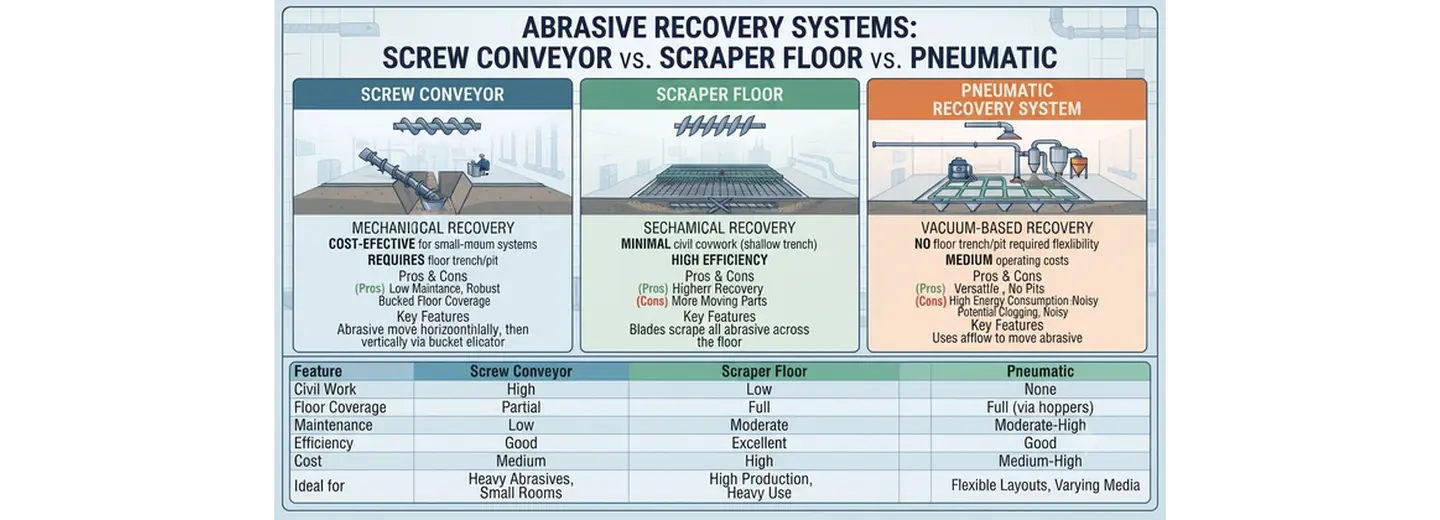
Screw Conveyor Recovery vs. Pneumatic Recovery Blast Room
Both systems collect used abrasive and return reusable media to the blasting equipment. Their main difference is how the material is transported.
|
Comparison Factor |
Screw Conveyor Recovery |
Pneumatic Recovery |
|
Recovery method |
Mechanical screw conveyors |
Suction or pneumatic conveying |
|
Typical abrasive |
Suitable heavy, durable metallic media |
Compatible media based on system design |
|
Conveying equipment |
Floor conveyors and often a bucket elevator |
Suction equipment and ducting |
|
Floor arrangement |
May require recessed channels or a recovery pit |
Can use above ground or low-profile collection arrangements |
|
Main consideration |
Conveyor layout, mechanical wear and maintenance |
Airflow capacity and abrasive compatibility |
|
Suitable application |
Heavy-duty recovery and suitable high throughput operations |
Selected lightweight media and suitable pitless installations |
A screw conveyor system may be preferable when the operation requires mechanical recovery of compatible heavy abrasive. A pneumatic system may be worth considering when excavation is restricted or a suitable above ground recovery arrangement is required.
Neither system is automatically better for every application. Selection should consider abrasive type, recovery capacity, floor layout and total operating cost.
Applications of a Screw Conveyor Recovery Blast Room
A screw conveyor recovery blast room is suitable for industrial facilities that require regular abrasive blasting and efficient abrasive recovery.
Steel Fabrication and Structural Steel
Steel beams, plates and fabricated structures often require surface preparation before protective coating. A suitable mechanical recovery system can support repeated blasting operations in fabrication facilities.
Heavy Engineering and Machinery Manufacturing
Large metal components and machinery parts often require rust and mill scale removal before painting or refurbishment. A properly designed sand blast room can accommodate suitable workpieces and manage abrasive recovery during these operations.
Industrial Maintenance and Refurbishment
Maintenance facilities can use abrasive blasting to prepare worn or corroded components for refurbishment. Mechanical recovery can help manage reusable abrasive in suitable applications.
Metal Component Manufacturing
Manufacturers processing castings and fabricated components can consider screw conveyor recovery where abrasive reuse and regular material handling are important.
How to Choose the Right Screw Conveyor Recovery Blast Room
Before purchasing a screw conveyor blast room, evaluate the following factors:
- Workpiece dimensions: Confirm the maximum component size, loading method and available room dimensions.
- Abrasive type: Check whether the recovery system is designed for the selected abrasive, such as copper slag, including its particle size, density and durability. Ensure the system can efficiently collect, separate and handle copper slag and other spent abrasive materials during blasting operations.
- Recovery capacity: Match conveyor and elevator capacity to the expected abrasive flow and blasting workload.
- Floor arrangement: Determine whether the installation requires recessed conveyor channels, a recovery pit or another collection design.
- Dust collection: Ensure that the dust collector and separator are suitable for the blasting process and applicable safety requirements.
- Maintenance access: Allow sufficient space for inspecting screw conveyors, bearings, drives, elevator components and filters.
- Future production needs: Consider whether the system can accommodate anticipated changes in workpiece size, abrasive consumption or production volume.
Explore Screw Conveyor Recovery Blast Room Solutions from BLASTROOMS
Selecting a suitable blast room involves more than choosing a conveyor. The enclosure, blasting equipment, abrasive recovery arrangement, separator and dust collection system must work together according to the application's requirements.
BLASTROOMS provides industrial shot blasting and abrasive blasting equipment solutions for surface preparation applications. Businesses planning a screw conveyor recovery blast room can evaluate their workpiece dimensions, abrasive type, production requirements and available installation space before finalizing a suitable configuration.
For a project-specific recommendation, discuss your application requirements with the BLASTROOMS team and request a quotation for a suitable blast room solution.
Conclusion
A screw conveyor recovery blast room can be a practical solution for industrial blasting operations that require regular abrasive collection, cleaning and reuse.
Its mechanical recovery arrangement can support efficient material handling in suitable fabrication, manufacturing and maintenance applications. However, the conveyor layout, recovery capacity, abrasive compatibility and floor requirements must be carefully evaluated before installation.
Choosing the right blast room recovery system helps align abrasive management, production requirements and maintenance needs with the facility's actual operating conditions.