
Abrasive Recovery Systems: Screw Conveyor vs. Scraper Floor vs. Pneumatic
Imagine your blasting machine is working efficiently, but operators are spending more time collecting used abrasives than preparing components. Production slows down, abrasive consumption increases, and maintenance expenses begin to affect your operating budget.
This is where the right blast room abrasive recovery system makes a difference.
An abrasive recovery system collects used blasting media from the blast room floor, transfers it to a recycling unit, and returns reusable abrasives to the blasting machine. The choice of recovery floor directly affects production efficiency, material handling, installation cost, and maintenance requirements.
Three commonly considered options are screw conveyor recovery, scraper floor recovery, and pneumatic recovery. Each system has different advantages and limitations depending on the abrasive type, component weight, production volume, and factory layout.
This guide compares all three systems to help industrial buyers and engineers select the right solution for their applications.
What Is a Blast Room Abrasive Recovery System?
A blast room abrasive recovery system is an arrangement designed to collect, transport, and recycle abrasive media after blasting operations.
The system generally includes a recovery floor, conveying equipment, bucket elevator or transfer arrangement, abrasive separator, storage hopper, and dust collection equipment.
During blasting, reusable abrasive and surface contaminants fall onto the floor. The recovery system transports the collected material to a separator, where dust, broken abrasive, and unwanted particles are removed.
Clean abrasive is then returned to the blasting equipment for reuse.
The recovery floor is particularly important because it determines how efficiently abrasive moves from the blasting area to the recycling equipment.
Screw Conveyor Abrasive Recovery System
A screw conveyor system uses rotating helical blades inside a trough to move abrasively towards a collection point.
It is commonly used in blast rooms where regular abrasive recovery is required and the floor layout allows the installation of conveyor channels.
Advantages
- Provides continuous abrasive collection during blasting operations.
- Offers a compact arrangement for suitable room layouts.
- Supports mechanical recovery with less manual material handling.
- Can be integrated with an abrasive separator, storage hopper and dust collector.
- Suitable for many industrial steel shot and steel grit applications.
Limitations
Screw conveyors contain moving components that experience wear during operation.
Abrasive size, material characteristics, conveyor speed, and conveying capacity must be considered during system design. Incorrect selection can lead to excessive wear, blockages, or reduced recovery performance.
The system may also require additional protection when handling abrasives contaminated with large debris, which is common in a sand blast room used for castings and fabricated parts.
Maintenance Cost
Maintenance generally involves inspecting screw flights, bearings, drive components, seals, and conveyor troughs.
Replacement frequency depends on abrasive characteristics, operating hours, and the quality of component protection.
For budgeting, buyers should consider the cost of wear parts, lubrication, drive maintenance, and access for repairs.
Civil Pit Requirements
Screw conveyor systems usually require recessed conveyor channels or a suitably designed floor arrangement.
The required pit depth and dimensions depend on the conveyor diameter, number of channels, discharge location, and maintenance access.
Civil work should be finalized only after reviewing the equipment layout and foundation drawings.
Scraper Floor Abrasive Recovery System
A scraper floor system uses mechanical scrapers to move abrasively across the blast room floor towards a collection point.
The scrapers travel through dedicated floor channels and push the abrasive towards the recovery equipment.
This arrangement is often considered for large blast rooms and applications where a substantial volume of abrasive must be collected.
Advantages
- Suitable for large industrial blast rooms.
- Can handle substantial abrasive quantities when correctly designed.
- Provides mechanical recovery across designated floor sections.
- Can support regular production and reduce manual abrasive collection, working alongside a sand blasting machine.
- Offers flexibility for certain heavy industrial component applications.
Limitations
Scraper systems have several moving parts and require careful floor planning.
The system may be unsuitable for facilities where the floor cannot accommodate the required channels or where frequent changes to the room layout are expected.
Large debris, excessive contamination, or unsuitable abrasive characteristics can also affect performance.
Maintenance Cost
Maintenance requirements may include inspecting scraper blades, chains, drive mechanisms, bearings, and floor channels.
Wear depends on the abrasive being handled, operating conditions, and the amount of debris entering the recovery system.
A properly designed system should provide access to important components so that maintenance can be completed without unnecessary production interruptions.
Civil Pit Requirements
Scraper floors generally require a more extensive civil arrangement than simple manual recovery systems.
Depending on the design, the floor may include multiple recessed channels, a collection pit, and supporting foundations.
The civil cost can increase when the system requires extensive excavation, structural reinforcement, or modifications to an existing factory floor to handle large volumes of cast steel grit.
Pneumatic Abrasive Recovery System
A pneumatic recovery system uses airflow and vacuum conveying to collect and transport abrasives from the blast room.
The system can collect abrasives through suction hoses, floor pickup points, or specially designed collection arrangements.
It is often considered where flexibility in abrasive collection is important or where mechanical floor conveyors are difficult to install.
Advantages
- Can reduce the need for extensive recessed floor conveyors.
- Offers flexibility for collecting abrasives from different areas.
- May be suitable for smaller rooms or selected retrofit applications.
- Can support abrasive recovery where civil modifications are restricted.
- Allows material collection through appropriately designed vacuum equipment.
Limitations
Pneumatic recovery requires suitable airflow, conveying velocity, and separation arrangements.
Heavy or dense abrasive media can require substantial conveying energy, depending on the system design and material flow.
The system must also be matched to the abrasive type and required recovery capacity. An undersized system may struggle to collect abrasives efficiently.
Maintenance Cost
Maintenance generally includes checking vacuum equipment, filters, hoses, separators, and wear-prone conveying components.
Abrasive impact can cause wear in pickup points and conveying lines. Filters also require regular inspection and replacement according to operating conditions.
The overall maintenance cost depends on abrasive characteristics such as steel grit or walnut shell, operating hours, and the design of the pneumatic equipment.
Civil Pit Requirements
Pneumatic recovery can reduce the need for extensive floor pits because abrasive is transported through a conveying arrangement rather than multiple recessed mechanical channels.
However, a collection hopper, pickup points, and suitable equipment foundations may still be required.
It is important to confirm the floor arrangement before assuming that a pneumatic system eliminates all civil work.
Screw Conveyor vs. Scraper Floor vs. Pneumatic: Comparison
|
Comparison Factor |
Screw Conveyor |
Scraper Floor |
Pneumatic |
|
Recovery method |
Rotating screw |
Mechanical scrapers |
Airflow and vacuum |
|
Typical application |
Regular industrial blasting |
Large industrial blast rooms |
Flexible or selected retrofit applications |
|
Initial investment |
Depends on conveyor layout |
Can be higher due to floor arrangement |
Depends on vacuum and conveying capacity |
|
Maintenance |
Screws, bearings, drives |
Scrapers, chains, drives |
Filters, hoses, vacuum equipment |
|
Civil requirements |
Recessed channels often required |
Extensive floor channels may be required |
Can reduce extensive floor excavation |
|
Main consideration |
Conveyor wear and capacity |
Floor layout and mechanical wear |
Airflow, abrasive weight and energy use |
Actual installation and maintenance costs depend on the equipment configuration, abrasive type, production requirements, and site conditions.
Which Abrasive Recovery System Is Best for Heavy Castings?
For heavy castings, a mechanical recovery system using screw conveyors or a scraper floor is often a practical choice.
Heavy castings may generate substantial abrasive volumes during blasting, and the recovery arrangement must support the required production rate. Proper blasting is also important when castings are later coated using a flame spray gun, as the coating needs a clean, well prepared surface to bond properly.
A scraper floor may be suitable for large blast rooms with high abrasive recovery requirements and sufficient space for floor channels.
A screw conveyor system can be appropriate where the room layout supports conveyor installation and the required recovery capacity can be achieved.
The final selection should consider casting dimensions, abrasive consumption, production volume, and the amount of debris generated during blasting.
Which System Is Best for Light Fabrication?
For light fabrication, a screw conveyor system may be suitable for regular blasting operations where a compact mechanical recovery arrangement is preferred.
Pneumatic recovery can also be considered for smaller rooms, selected applications, or facilities where extensive floor excavation is difficult.
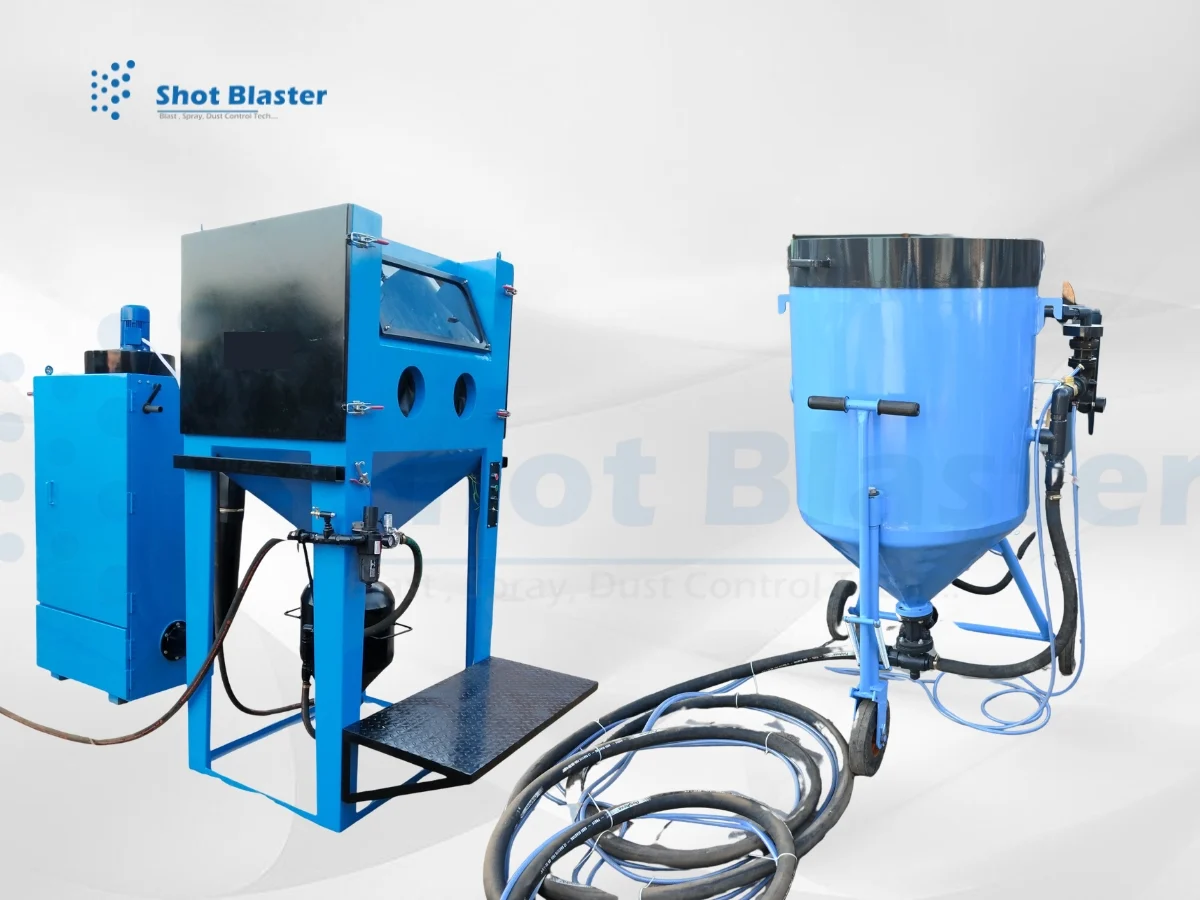
For occasional blasting or low production volumes, manual recovery may remain a practical alternative, and a shot blasting machine can be considered for smaller components that do not require a full blast room.The best option depends on how frequently the room operates, the abrasive being used, and the expected amount of material to be recovered.
How to Select the Right Blast Room Abrasive Recovery System
Before selecting a recovery system, engineers should evaluate the following factors:
-
Maximum component dimensions and weight.
-
Daily production volume and blasting hours.
-
Abrasive type (such as steel shot for surface cleaning), size, and consumption rate.
-
Required recovery capacity.
-
Available factory floor space.
-
Civil pit and foundation requirements.
-
Access for maintenance and replacement of wear parts.
-
Total installation and operating costs.
A recovery system should be selected according to the complete blasting process rather than the recovery floor alone.
For example, a high-capacity floor recovery arrangement will not deliver the expected performance if the separator, bucket elevator, or dust collection system cannot handle the same material flow.
Conclusion
Selecting the right blast room abrasive recovery system is essential for efficient abrasive recycling, reliable production, and controlled operating costs.
Screw conveyors can provide a practical solution for regular industrial blasting, scraper floors are worth considering for large recovery requirements, and pneumatic systems offer flexibility for selected applications.
For heavy castings, mechanical recovery systems are often suitable when designed for the required abrasive volume. For light fabrication, screw conveyors or pneumatic recovery may offer a practical balance between installation requirements and operating needs.
Planning a new blast room or upgrading an existing system? Contact BLASTROOMS to discuss your component dimensions, abrasive type, production capacity, and factory layout. A properly selected recovery system can help improve blasting efficiency while supporting long-term operational reliability.