
Blast Room Cost in India: Complete Pricing & Budgeting Guide (2026)
Planning to install a blast room in your factory? Understanding the blast room price in India is essential before investing in industrial surface preparation equipment. A properly designed blast room helps remove rust, mill scale, old coatings and surface contaminants while improving productivity and abrasive consumption.
However, the total sand blasting room cost depends on more than the chamber size. Abrasive recovery, dust collection capacity, rubber lining, blasting equipment and installation requirements all influence the final investment.
This guide explains the estimated blast room cost in India for 2026, the major pricing factors and how industrial buyers can prepare a realistic budget.
What Is the Blast Room Price in India in 2026?
The blast room price in India generally starts around ₹5 lakh for basic industrial configurations and can exceed ₹80 lakh for large, customized systems. Heavy duty projects with extensive automation or specialized requirements may require an even higher investment.
The following table provides indicative budgeting ranges for different industrial applications.
|
Blast Room Category |
Typical Configuration |
Estimated Price |
|
Small Blast Room |
Compact chamber, manual recovery, basic dust collector |
₹5-10 lakh |
|
Medium Blast Room |
Larger enclosure, mechanical recovery, upgraded dust collection |
₹10-25 lakh |
|
Heavy Duty Blast Room |
Large components, heavy recovery system, high-capacity dust collection |
₹25-80 lakh+ |
These are approximate equipment level estimates, not fixed market prices. The actual sand blasting room cost depends on the technical specifications, construction requirements, and project scope.
For example, a small room with basic manual recovery may cost considerably less than a similarly sized room equipped with automatic abrasive recycling and advanced filtration.
Factors That Affect Sand Blasting Room Cost
Understanding the following factors will help you compare quotations accurately and avoid unexpected expenses.
Blast Room Size and Dimensions
Room dimensions are one of the biggest cost factors. A larger enclosure requires additional structural steel, wall panels, protective lining, doors, lighting and ventilation capacity.
The room must accommodate the largest component, operator movement and safe blasting access.
A compact pressure blast room for small, fabricated components will generally require a smaller investment than a drive in room designed for large industrial structures, vehicles or heavy machinery.
Abrasive Recovery System Type
The abrasive recovery system significantly affects the initial investment and operating cost.
- Manual recovery: Suitable for occasional blasting and lower production volumes. It generally has a lower initial cost but requires more manual handling.
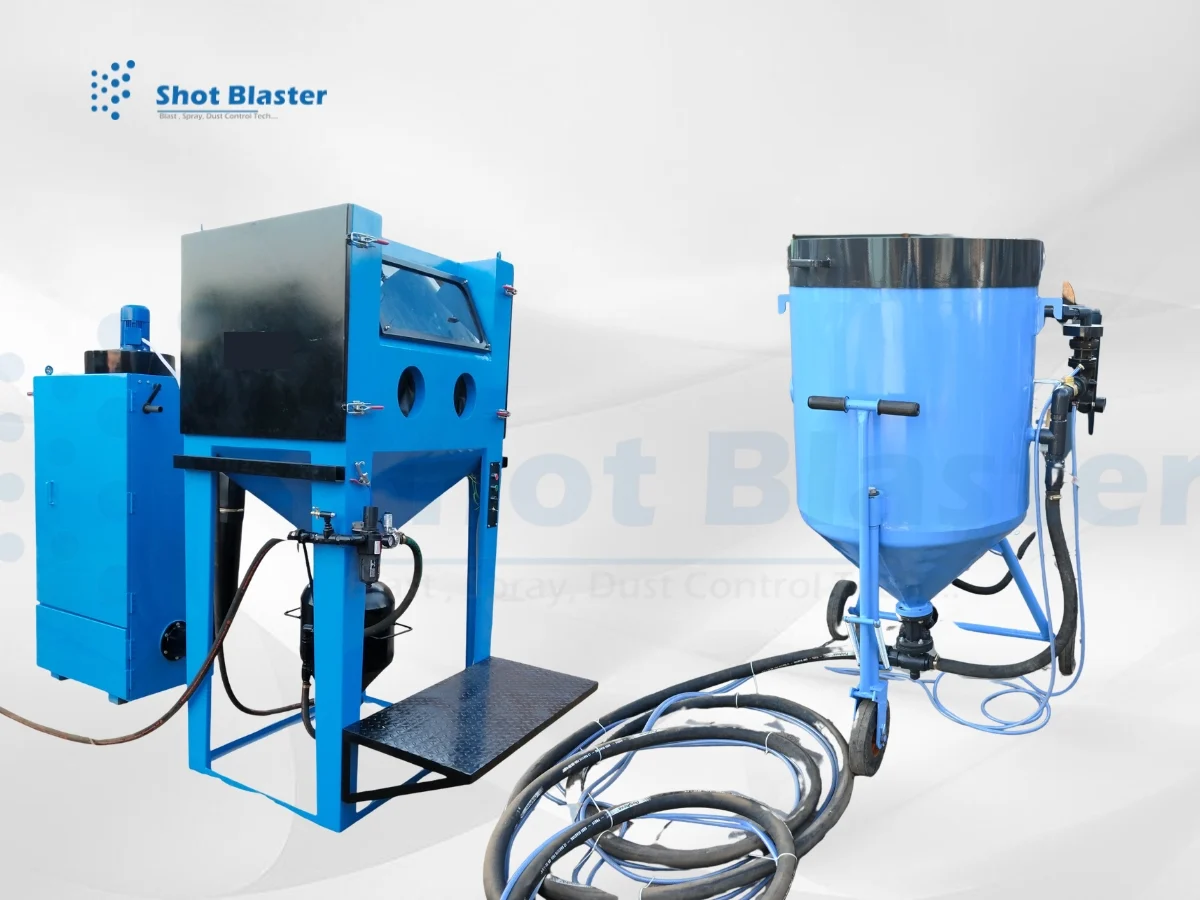
- Mechanical recovery: Uses equipment such as screw conveyors, bucket elevators and separators to collect and recycle reusable abrasive. It is suitable for regular industrial operations.
- Automatic recovery: Uses integrated collection and recycling arrangements to support continuous production and reduce manual handling.
The right recovery system depends on production volume, abrasive type and the expected frequency of operation.
Dust Collector Capacity in CFM
Dust collection is another important component of the blast room system price.
CFM stands for cubic feet per minute and represents the volume of air moved by the dust collection system.
A larger blast room, higher dust generation and greater production requirements may demand a higher capacity fabric bag dust collector. This can increase the cost of the collector, fan, ducting, filters and electrical equipment.
The required CFM should be calculated according to the room dimensions, airflow requirements, blasting equipment and dust characteristics. Selecting a collector only on the basis of its price may result in poor visibility, inadequate dust extraction and higher maintenance costs.
Rubber Lining Thickness
Rubber lining protects the internal walls of the blast room from repeated abrasive impact.
The required lining thickness depends on the abrasive material, blasting intensity, component type and operating hours.
Thicker or more wear-resistant rubber lining can increase the initial sand blasting room cost, but it may help reduce wall damage and replacement frequency in demanding applications.
Buyers should compare the specified lining material, thickness and coverage rather than evaluating quotations only by the overall room price.
Additional Costs to Include in Your Budget
The quoted blast room price may not include every item required for installation and operation.
Before finalizing a purchase, check whether the following expenses are included:
- Blast room structure, doors and protective lining
- Abrasive blasting machine, hoses and nozzles
- Abrasive recovery and recycling equipment
- Dust collector, exhaust fan and ducting
- Compressor and compressed air piping
- Electrical installation and control panel
- Component handling equipment, such as trolleys or hoists
- Transportation, installation and commissioning
Civil work, foundation preparation, GST and site-specific electrical modifications may also be charged separately.
Request an itemized quotation so you can understand the complete project investment.
How to Choose the Right Blast Room Within Your Budget
The cheapest blast room is not always the most economical option for long term industrial use.
Start by evaluating your largest component dimensions, daily production target and the type of abrasive you plan to use.
For occasional blasting or jobs at multiple locations, a portable blast room with manual recovery may be sufficient. For regular production, mechanical abrasive recovery can help reduce manual handling and abrasive replacement expenses.
For heavy fabrication, shipbuilding or large industrial components, a heavy duty blast room with suitable dust collection and wear protection may be a better investment.
Also consider the availability of replacement filters, rubber lining, recovery components and technical support.
A properly matched system can help reduce downtime, improve surface preparation consistency and control operating expenses.
How to Get an Accurate Blast Room Quotation
To receive a reliable blast room price in India, provide your manufacturer with the following information:
- Maximum component length, width and height.
- Type of material to be blasted.
- Required production capacity.
- Preferred abrasive media.
- Manual, mechanical or automatic recovery preference.
- Required dust collector capacity or available ventilation details.
- Installation location and available factory space.
These details help the manufacturer recommend the appropriate configuration instead of offering a generic price that may not match your requirements.
At BLASTROOMS, customers can explore customized blast room systems, including automatic blast room options, designed for industrial surface preparation. The right configuration can be selected according to component dimensions, production requirements and operating conditions.
Conclusion
The blast room cost in India in 2026 depends on the size of the enclosure, abrasive recovery system, dust collector CFM, rubber lining thickness and installation requirements.
A basic industrial blast room may start around ₹5 lakh, while larger and more advanced systems can reach ₹80 lakh or more.
The most effective way to control your investment is to compare complete technical specifications, understand what is included in the quotation and select a system that matches your production needs.
Looking for the right blast room for your factory? Contact BLASTROOMS to discuss your component dimensions, production capacity and technical requirements. Request a customized quotation to understand the estimated sand blasting room cost for your application.